
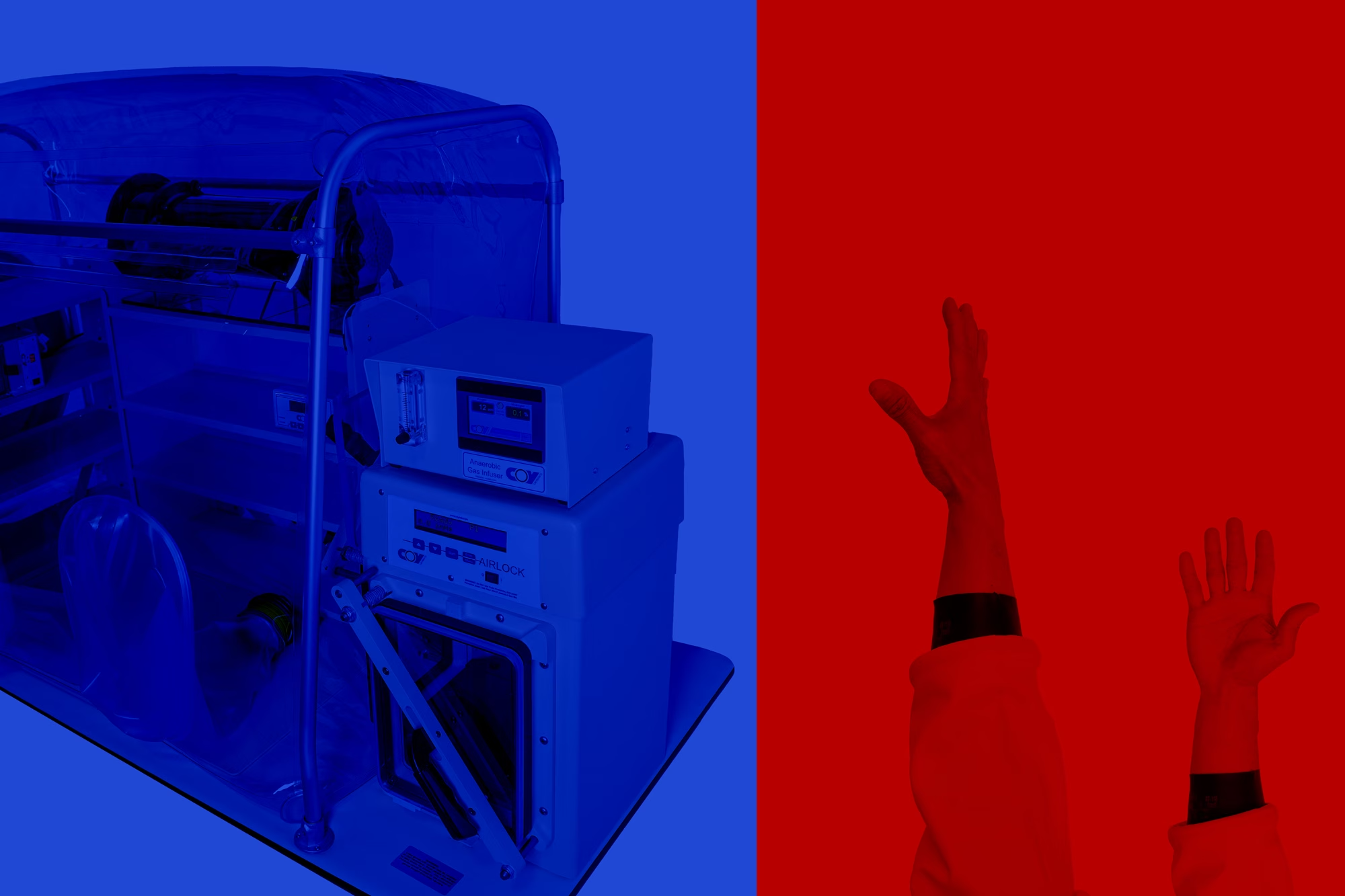
Until recently, gloveless operation in an anaerobic chamber meant choosing a rigid platform. With the introduction of Coy’s Quick Change Cuff (QCC), gloveless operation is now a fully supported option on the vinyl platform. This article provides an introduction for labs evaluating whether gloveless is the right fit for any specific protocols they undertake.
The Quick Change Cuff is designed to accept either a sealed glove or a gloveless cuff at the same hardware interface. Sealed gloves using the QCC are the standard configuration on Coy Vinyl Chambers. Labs that need a gloveless interface for fine manipulation, extended sample work, or direct tactile feedback can now upgrade to the gloveless cuffs rather than trading chamber platforms for these features. The following sections outline the design, access, redundancies, and modes of the gloveless platform on a Coy Vinyl Anaerobic Chamber.
The QCC is a rigid cuff bonded to the chamber sleeve and is engineered to make glove changes a simple, fast process. The gloveless sleeve is a modular component that integrates directly with the Quick Change Cuff already mounted to the vinyl chamber. The same hardware supports both modes without modification to the chamber itself.
The gloveless cuff is a separate rigid component with two engineered seal features on its outer face: an O-ring groove that seats a primary O-ring, and a molded ball profile that locks into the same groove on the QCC. To install the cuff, the operator pulls the chamber sleeve back to expose the rigid cuff and its O-ring groove, inserts the gloveless cuff, and stretches it past the groove. The O-ring is then seated, and the operator presses the molded ball of the cuff into the groove alongside it. When seated correctly, both the O-ring and the ball sit in the same groove, producing a redundant mechanical seal between the gloveless cuff and the QCC.
With the gloveless cuff installed, the operator inserts a bare forearm through the cuff to access the chamber interior. The cuff is dimensioned to seal against the operator’s forearm during use. Inside the cuff is a sleeve plug that the operator places into the cuff whenever the arm is withdrawn. The plug is fitted with an internal O-ring and a turn handle: rotating the handle clockwise expands the O-ring against the inner cuff wall, sealing the port closed when no arm is present. Counter-clockwise rotation releases the seal so the operator can withdraw the plug and insert their arm. The plug is designed to remain inside the chamber at all times, eliminating any need to open the chamber to access it.
The structure described above is what makes the gloveless system viable in a strict anaerobic environment. The O-ring provides the primary gas barrier between the gloveless cuff and the QCC, and the molded ball seated in the same groove serves as a secondary mechanical lock that resists displacement under the small pressure swings that occur during normal chamber operation. The same redundant logic governs the sleeve plug: when the arm is out of the cuff, the expandable internal O-ring on the plug seals against the inner cuff wall to maintain atmosphere isolation between cycles.
This layered approach reflects a basic principle of anaerobic chamber design. Using an interface that opens to accommodate an operator’s arm increases the risk of atmosphere disturbance so the gloveless cuff is designed to hold the seal without depending on operator behavior. Engineering redundancy into both the cuff and the plug keeps the gloveless interface as reliable as the rest of the chamber across many operator cycles per day.
Because the gloveless cuff was designed to integrate with the now-standard QCC, labs that purchase the gloveless upgrade are not locked into a single operator interface. A glove can be exchanged for a gloveless cuff, or vice versa, in a process measured in seconds rather than the 20 to 30 minutes a traditional glove change would have required before the QCC was introduced.
This matters for shared facilities and multi-user labs, where different protocols and different operators may require different interface configurations on the same chamber. Rather than committing a chamber permanently to one operating mode, labs can keep the same chamber adaptable to whatever protocol or operator is using it.
A gloveless interface on an anaerobic chamber is only useful if the chamber’s atmosphere remains as strict with the cuff installed as it would with a sealed glove. The Coy design holds that line through the three engineered systems working together: redundant mechanical seals at the cuff, the inherent gas-handling properties of the vinyl chamber body, and the active oxygen removal that defines every Coy chamber regardless of operator interface. Together, these three systems make gloveless operation a supported configuration on the vinyl platform without compromising the anaerobic environment that defines Coy’s chamber line.
The design described above is best understood in the context of an actual chamber. To walk through the gloveless cuff and Quick Change Cuff system in detail, or to ask specific questions about how the gloveless option would integrate with an existing or planned Coy Vinyl Anaerobic Chamber, contact us by phone at (734) 475-2200, or direct your sales inquiries to [email protected].

Talk to us about your research requirements, and we’ll discuss customization options to ensure your Coy chamber meets your specifications.
