
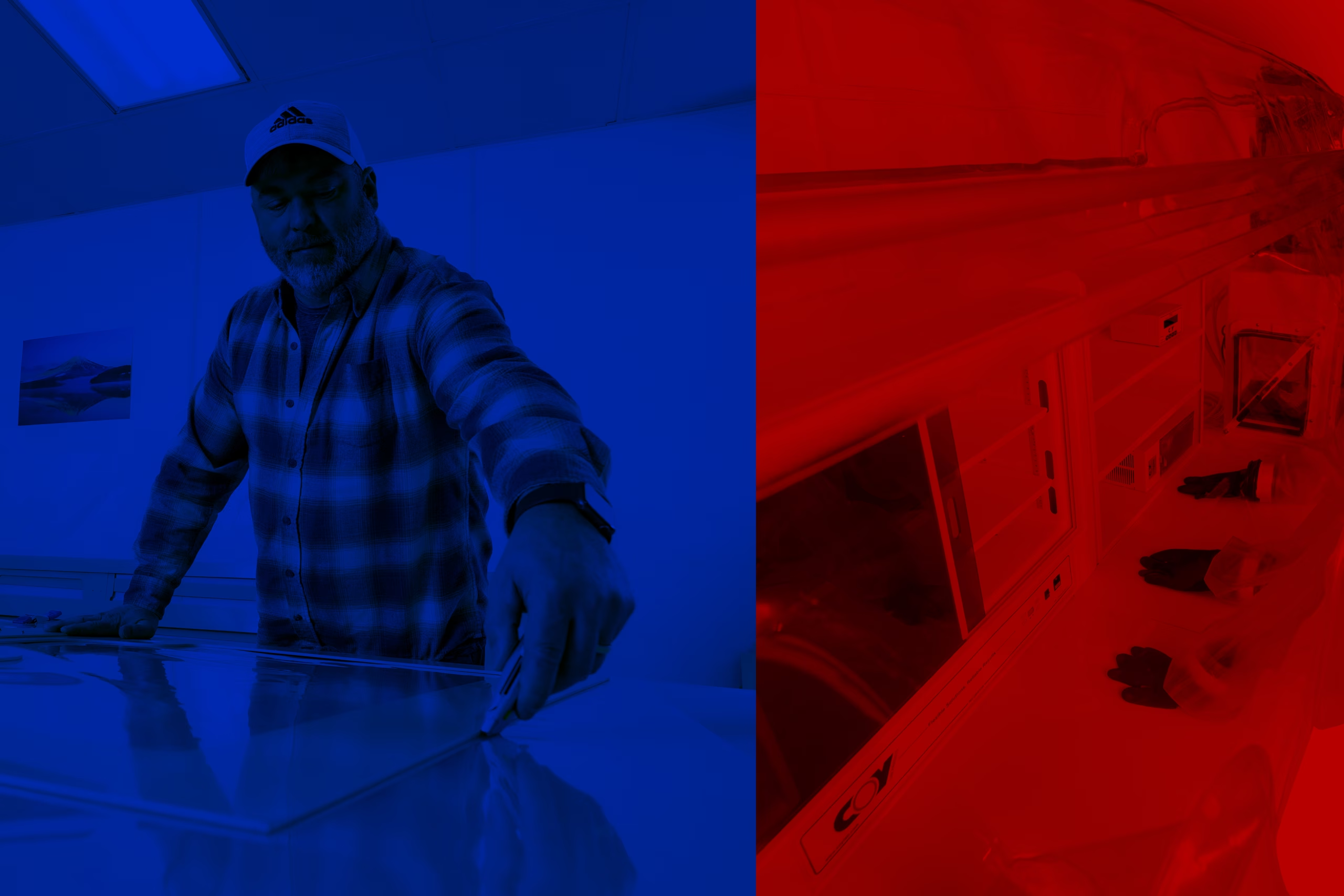
Coy has developed an interface that brings gloveless operation to the vinyl chamber. This article lays out the advantages of applying this gloveless interface to a Coy Vinyl Anaerobic Chamber for laboratories whose protocols suit gloveless operation. The advantages fall into two categories: structural benefits that come from the vinyl chamber body itself, and operator-level gains that show up in the way protocols run inside the chamber. Both categories matter for labs evaluating whether a gloveless vinyl chamber configuration is worth pursuing.
The vinyl chamber body is constructed from optically clear, pressed and polished 30-mil vinyl with permanently attached chamber sleeves fitted with Coy’s proprietary Quick Change Cuff (QCC). The sleeves are made from 15-mil flexible vinyl, frosted to prevent cracking and gas leakage at high-flex points such as the bend behind the cuff. Because of the flexibility of the material, vinyl chambers can be built much larger than rigid chambers, allowing operators to reach deeper and higher into the chamber.
This flexibility also means that, rather than venting to relieve pressure changes during airlock cycling or operator interaction, a vinyl chamber expands and contracts to absorb those changes, keeping the working atmosphere intact and avoiding gas waste resulting from pressure relief mechanisms. Additionally, larger volume chambers naturally dissipate any O2 that enters the chamber during use, making anaerobic conditions easier to maintain.
The individual’s glove used on the bench allows for the same dexterity within the chamber. For protocols where fingertip sensitivity is the limiting factor, this is the most direct functional gain over a sealed glove. Tasks that depend on feeling subtle differences in pressure, texture, or resistance benefit immediately, and operators can carry out fine manipulation with the same tactile information they would have on an open bench. For labs whose protocols have always required a gloveless interface to deliver the necessary precision, the gloveless option on a Coy Vinyl Chamber removes a workaround that may have shaped the lab’s chamber selection in the past.
For protocols that already call for extended gloveless work, the flexible vinyl chamber wall around the QCC absorbs forearm contact rather than pressing back, which extends sustained working time compared to a rigid chamber wall. Operators who routinely work for longer periods at the chamber will notice that the working position remains comfortable across the session rather than becoming a limiting factor on its own. The same flexibility that allows the chamber to absorb pressure changes during airlock cycling is a direct advantage for the operator, reliving discomfort during long manipulation work.
For specific tasks where the glove layer adds friction, such as grasping small caps, threading fine tubing, or aligning small instruments, removing the glove can shorten handling time. This benefit shows up clearly on the tasks where using a glove was directly adding seconds or minutes per repetition. However, for tasks that glove use won’t impede, handling time will remain the same.
Because the QCC accepts either a glove or a gloveless cuff, a single chamber can support both gloved and gloveless workflows. Labs running mixed protocols, or labs that want gloveless as an option for some experiments, do not have to dedicate separate chambers. The same chamber can be reconfigured for the next experiment in a process measured in seconds, which keeps capital tied up in fewer pieces of equipment.
The sleeve plug supports a clean handoff between operators. The plug remains inside the chamber and seals the cuff whenever the operator’s arm is out. For multi-user labs, this builds a repeatable handoff procedure between operators that does not require any chamber opening or atmosphere disturbance, and reduces the variability that can otherwise come from many hands using the same chamber.
The Coy Vinyl Anaerobic Chamber remains the industry’s most cited system, maintaining strict anaerobiosis at <5 parts per million oxygen during normal operation. Trace oxygen introduced when the operator inserts or withdraws an arm through the gloveless cuff is absorbed by the same continuous removal process that handles airlock cycling and routine diffusion, with no operational adjustment required. The result is a gloveless interface that delivers the operator-level advantages described above without compromising the strict anaerobic conditions that the work depends on.
Whether these advantages translate into meaningful day-to-day gains depends on the specific protocols a lab runs, the length of typical manipulation sessions, and how the chamber fits into a multi-user workflow. To talk through how the gloveless configuration would map to the work happening in your lab, contact us by phone at (734) 475-2200, or direct your sales inquiries to [email protected].

Talk to us about your research requirements, and we’ll discuss customization options to ensure your Coy chamber meets your specifications.
