
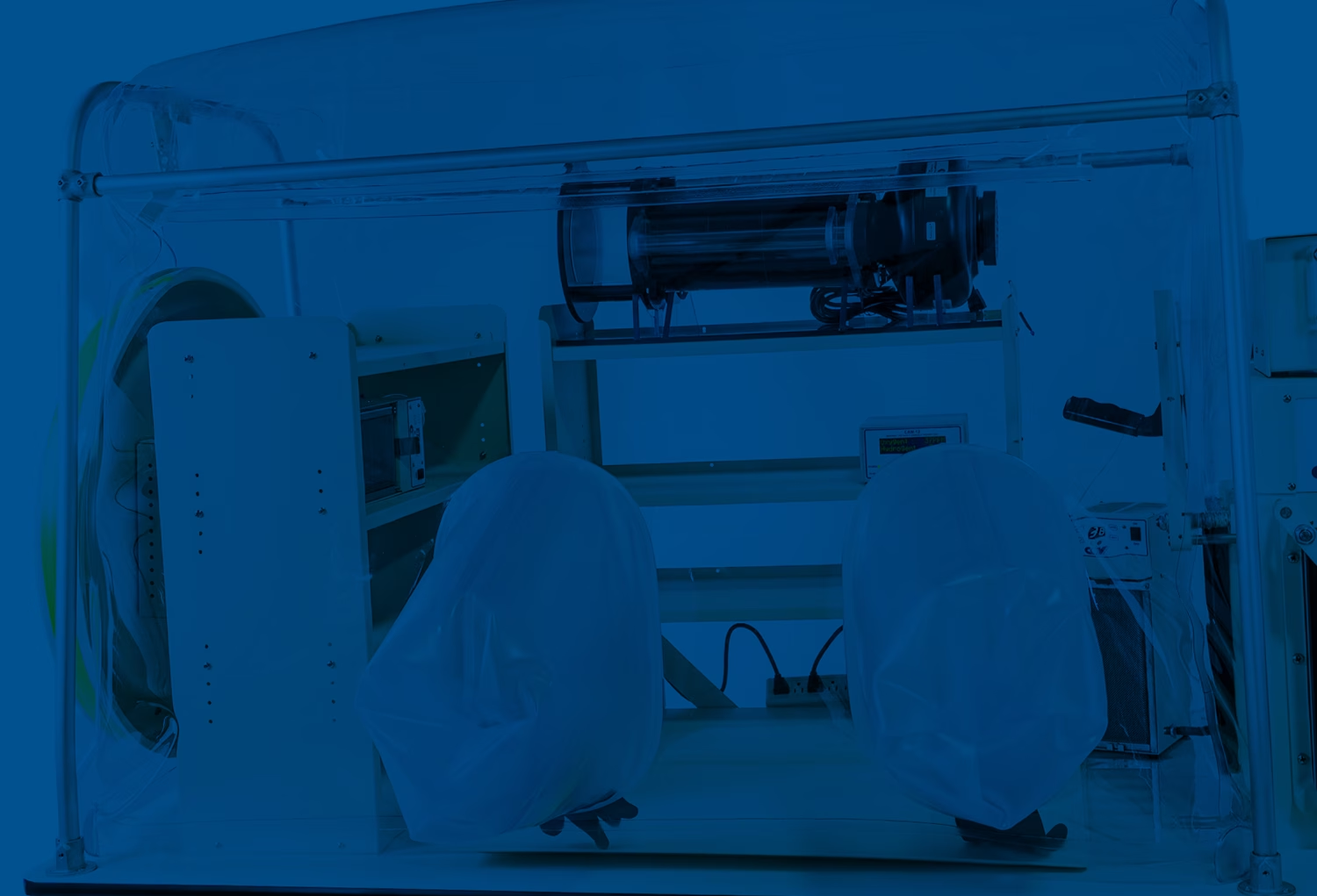
Anaerobic research environments demand uncompromising precision and reliability. Coy Laboratory Products creates precision engineered chambers using innovative materials to house hydrogen-palladium catalysts. The result is highly efficient, best-in-class removal of excess oxygen from anaerobic environments with a lower operational cost than the competition.
Coy Laboratory Products pioneered anaerobic chambers designed especially for microbiology research and remains the leader in the industry, setting the standard for creating and maintaining strict anaerobic conditions. The quality, innovation and leadership of Coy Laboratory Products has resulted in Coy Anaerobic Chambers earning the distinction of the most cited anaerobic chamber in the world.
Coy Anaerobic Chambers are engineered to ensure data integrity and accurate findings while reducing costs associated with consumables and system maintenance. The fundamental distinction driving Coy’s superior performance is a hydrogen-palladium catalytic system combined with chamber material innovation and precision engineered circulation design. Coy Anaerobic Chambers deliver the strictest anaerobic environment available by rapidly and reliably neutralizing residual oxygen, maintaining levels at 0-5 parts per million with minimal hydrogen carryover.
At the heart of every Coy Anaerobic Chamber lies a finely tuned hydrogen–palladium catalytic system that continuously converts residual oxygen into water without generating heat or harmful byproducts. Although the chamber is technically airtight, trace amounts of oxygen can enter the chamber during an airlock cycle or by diffusion from the gloves. The precisely engineered hydrogen-palladium catalytic system prevents trace oxygen from remaining in the system, maintaining the strict anaerobic conditions necessary for reliable research outcomes.
All Coy Anaerobic Chambers operate with a Hydrogen (H₂) gas mix reacting with the palladium catalyst to remove oxygen (O₂). Users supply two gas sources: a background gas, typically Nitrogen (N₂) used for general purging and chamber maintenance, and a gas mix of 5% H₂ in an inert gas, most commonly N₂ (although mixes of 1-20% CO₂ can be easily substituted based on experimental requirements). Industrial-grade gas mixtures provide optimal performance without requiring premium-grade specifications.
When any trace O₂ enters the chamber, the palladium catalyst creates a meeting ground for O₂ and H₂ molecules, facilitating the reaction:
2 H₂ + O₂ → 2 H₂O
This reaction is highly exothermic at the catalyst surface yet remains isothermal within the chamber atmosphere, ensuring stable temperatures for sensitive experiments. Palladium has high activity at low hydrogen partial pressures which gives Coy chambers the ability to achieve rapid oxygen scrubbing with minimal hydrogen carryover, safeguarding both microbial cultures and internal electronics.
During routine laboratory use, oxygen enters the chamber through airlock operations and minor diffusion through glove interfaces. The chamber’s design accounts for these unavoidable oxygen intrusions through continuous, automated removal processes.
When materials enter the chamber, the airlock operation follows a precise sequence: items are placed in the airlock with the outer door open to the atmosphere, then the outer door is sealed. The airlock undergoes vacuum and backfill cycles with background gas to remove oxygen, followed by a final fill with the hydrogen gas mixture before the inner door opens and materials enter the chamber environment.
This process ensures that hydrogen-containing atmosphere from the airlock mixes with the chamber’s existing hydrogen supply, replenishing the system while any residual oxygen is immediately neutralized by the palladium catalyst. The same controlled process applies to removing items from the chamber, maintaining strict anaerobic conditions throughout material transfer operations.
Coy Anaerobic Chambers’ design utilizes the Stak-Pak system: wire mesh trays which hold the palladium catalyst to the fan box, providing the option to include various filtration elements based on the needs of the experiments, while maintaining proper flow through of gas. The consistent flow-through created by Coy’s system and proprietary catalyst formulation maintains 0–5 ppm O₂, even under frequent airlock cycling, delivering the strictest anaerobic environment in its class. The design maintains these conditions reliably across varying operational demands, from routine sample transfers to extended cultivation periods requiring days or weeks of uninterrupted anaerobic conditions.
Coy Laboratory Products promotes a modular design philosophy that allows laboratories and researchers to customize systems that meet their specific needs and budget. Whether starting with a basic configuration or specifying a bespoke chamber for a fully automated system, users have the flexibility to decide how a Coy Anaerobic Chamber will best serve their needs.
Coy Labs continues to refine state‑of‑the‑art in anaerobic chamber design, marrying advanced hydrogen/palladium catalysis with automation, ergonomics, and protective media to serve the evolving needs of commercial research. Looking ahead, planned R&D initiatives include:
Together, these developments will further empower scientists to pursue anaerobic investigations with maximum confidence, minimal overhead, and uncompromised data quality.
If you would like to know more about Coy anaerobic chambers, contact us by phone at (734) 475-2200, or direct your sales inquiries to [email protected]. We would be happy to discuss your needs or answer any question regarding the customization of our chambers or their suitability for your research.

Talk to us about your research requirements, and we’ll discuss customization options to ensure your Coy chamber meets your specifications.
